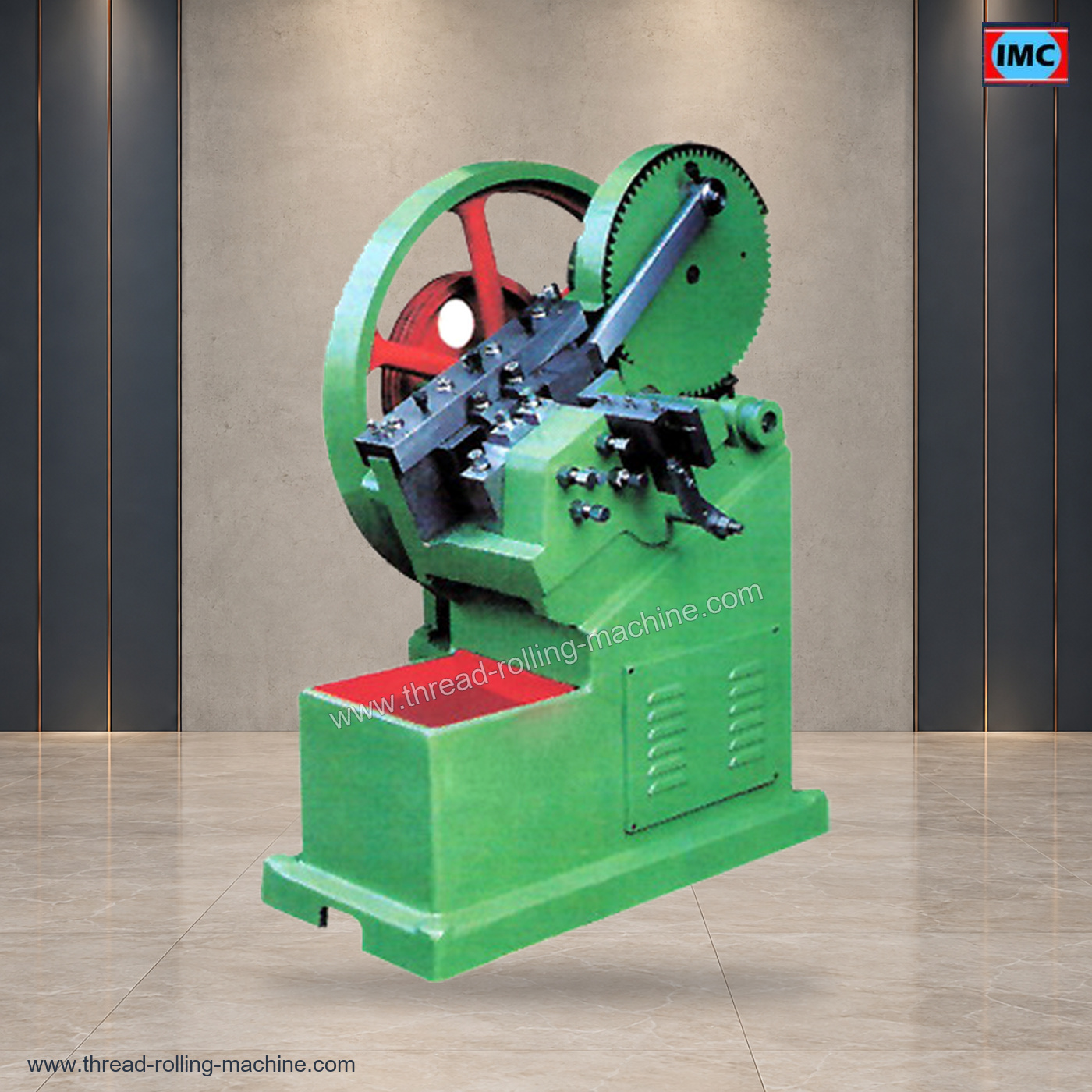
Review Flat Die Thread Rolling Machine for Fasteners for your component and the required production operation.
Place the operation in the production route

The role of this equipment is to form external threads on suitable fastener blanks between matched flat dies. Compare the incoming stock with the component required by the next manufacturing or assembly stage. Define blank diameter and material, fastener shape, thread form and thread length. The finished drawing should show which dimensions and surfaces this operation must produce.

Plan handling and changes between jobs

Review flat-die geometry, blank presentation, feeding and changeover requirements, together with loading space and the movement of the component between stages. The blank and flat-die profile should be considered together; this is cold forming rather than thread cutting. List the sizes and batch quantities before discussing output. Tool changes, handling and inspection should be included when assessing the proposed workshop arrangement.

Connect quality checks to machine selection

Agree how the component will be assessed for formed thread dimensions, gauge acceptance and the condition of the blank. Identify the representative material and sample needed to establish the setup. Compare the listed models against the drawing and the operation, then ask IMC to state the supplied tools and accessories. Add the chosen options and quantity to the Quote List with the material, destination and power details so the offer reflects the actual production requirement.

Information to send with your enquiry

  • Blank diameter and material
  • Fastener shape
  • Thread form and thread length

To review your application, send IMC your component drawing and requirements. You can also compare related machines and tooling in the product range.

VIEW SPECIFICATIONS

Tags

Automatic Cold Thread Rolling Machine, Flat Die Thread Rolling Machine, Industrial machinery, Industrial machinery Manufacturer in India, Machinery Exporter in India, Ludhiana Punjab India, flat thread rolling dies manufacturers in india, thread rolling machine, flat thread rolling dies
CONFIGURE YOUR MACHINE

Available options

Select the required options and add this machine to your quotation.

Available Options


Your selected configuration is stored in the existing Quote List flow for review before enquiry.

VIDEO REFERENCE

Machine Videos Gallery

No product-specific playlist is stored for this item yet. View IMC machine demonstrations and production videos in the main gallery.

View Machine Videos
TECHNICAL DATA

Technical Specifications

Model data and technical details supplied for this product. Final configuration can be confirmed against your application.

FDTRM flat-die model reference table

Model  No.FDTRM-1FDTRM-2FDTRM-3FDTRM-4FDTRM-5FDTRM-6
Min. Max. Dia Can Be Rolled1/16"x1/4"1/8"x1/2"1/8"x 1/2"1/4"x5/8"1/4"x3/4"1/4"x7/8"
Max. Length of Thread2""2.1/2""3""3""4""4""
Dimension of Fixed Dia3"x2"x1"5"x2.1/2"x1"5"x3"x1"6"x3"x1"6"x4"x1"7"x4"x1"
Dimension of Moving Dia4"x2"x1"6"x2.1/2"x1"6"x3"x1"7"x3"x1"7"x4"x1"8"x4"x1"
Production in Pieces Per Minute806060503030
Power Required in H.P.2357.51015

The dimension rows refer to fixed and moving dies. Confirm die drawings, utilities and the ordered size with IMC. Production figures are application-dependent published references.

Frequently Asked Questions About Flat Die Thread Rolling Machine

The listed equipment forms a suitable external thread between fixed and moving profiled flat dies. It differs from the cylindrical dies used in two-roll and three-roll hydraulic arrangements.

The accessory description lists vibratory or rotary-drum feeding according to requirement, with a stairs-type option on request. Confirm the actual supplied hardware for your blank and selected model.

The published list identifies one set for one standard size. Have the quotation state that size and profile, and request other tool sets separately where required.

The six columns list 2, 3, 5, 7.5, 10 and 15 HP. Any different configuration needs its own approved specification and installation requirements.

Use representative blanks and agreed thread inspection. Include feeding, handling and acceptance checks, rather than comparing nominal rates from different parts.